People may differ in their opinions about the origin of evil: where it came from, who is to blame for it. But people are unanimous in acknowledging the obvious fact that evil exists in the world. And not only in the world, but it dwells in every person, even the best.
One of the indisputable facts mentioned in Holy Scripture is the presence of evil in the world: “We know that… the whole world lieth in wickedness” (1 John 5:19). People may differ in their opinions about the origin of evil: where it came from, who is to blame for it. But people are unanimous in acknowledging the obvious fact that evil exists in the world. And not only in the world. It dwells in every person, even the best.
The dominion of evil has been a theme for many ancient and modern writers, but nowhere in all the world’s literature has the degree of evil in the world been so exactly defined as in Holy Scripture, which asserts the absolute truth: “…the whole world lieth in wickedness”.
Evil is the nature and spiritual essence of the world. It is its element. As air is to the bird, water to the fish or mud to the pig, so evil is to the world. Remove all the evil by which the world lives, moves and has its being – what will remain of its great deeds, amusements and pleasures?
Note the word “lieth” that the Bible uses. Picture it: the whole world, like a mortally ill patient languishing on a hospital bed, lies in wickedness and has no strength to rise. Note also in the quoted verse the word “whole.” The modern world, divided into East and West, is inclined to attribute evil, with its corruption and depravity, violence and injustice, to only one half of it, but Scripture says: “the whole world,” be it capitalist, monarchic or of any other kind. “For all have sinned, and come short of the glory of God… that every mouth may be stopped, and all the world may become guilty before God” (Romans 3:23, 19). The whole world is infected with one and the same leprosy of sin, and there is not a single spiritually healthy or sinless or perfect person in it. We have all inherited the leprosy of sin from our first parents, Adam and Eve. Our fallen, depraved nature is a breeding ground of the negative traits of our character. It is the source of every kind of lawlessness and ungodliness.
For this reason each of us is bound to acknowledge this sad heredity and say with King David: “Behold, I was shapen in iniquity; and in sin did my mother conceive me” (Psalm 51:5). Between leprosy and sin there is much that is analogous and alike. Sin, like leprosy, is impartial and merciless. Leprosy strikes servant and commander alike, king as well as thousands of other commoners. Leprosy pays no regard to position or education, to descent or upbringing, to beauty or wealth. “The heart is deceitful above all things, and desperately wicked: who can know it? I the LORD search the heart, I try the reins, even to give every man according to his ways, and according to the fruit of his doings” (Jeremiah 17:9-10).
Sin, like leprosy, ought to fill us with horror, but unfortunately it is not sins that horrify us but only their consequences. People do not loathe murder, adultery, deceit, debauchery and many other dreadful sins, but they fear landing in the dock, in prison or in a hospital bed. People love sin, seek it out, pay large sums for shameful pleasures and revel in debauchery. Such is the seductive power of sin.
Sin, like leprosy, begins in a person with something insignificantly small. It is said that the first symptoms of leprosy are so slight that even specialists find it hard to identify this terrible disease before a small whitish spot appears with a suspiciously white hair in the center. One who pays no attention to the spot learns of his leprosy only when the eyes begin to water, the hair and teeth fall out, the nails and whole limbs drop off. And when the patient’s tongue begins to dry up, death slowly but surely comes into its own.
Sin, too, begins with something insignificantly small, but, developing in our heart and character, it leads unswervingly to eternal destruction. “Then when lust hath conceived, it bringeth forth sin: and sin, when it is finished, bringeth forth death” (James 1:15).
Expulsion from ParadiseThomas Cole · Public domain · Wikimedia Commons
Sin once committed separates a person from God forever. Sin defiles his soul and makes him unfit for fellowship with the holy God. One who has sinned once comes under the law of sin and can no longer stop on this path; sin forms in him a sinful habit.
Sin that we have allowed and repeated many times deprives us of the ability to stand against it and resist it. Like a powerful wrestler, it lays the sinner “on both shoulder blades” and does not let him rise.
A sin committed is usually hidden. If it cannot be concealed, people try to faith/justification/" title="Justification">justify it in every way: “Well, what sin is there in this? Others do even worse…”
Sin cannot be hidden. Such is its law: a sin once committed must be repeated, and is repeated without end, so sooner or later a secret sin is discovered and becomes known. “For there is nothing hid, which shall not be manifested; neither was any thing kept secret, but that it should come abroad” (Mark 4:22). “Fools make a mock at sin…” says Solomon (Proverbs 14:9). But he laughs best who laughs last. Therefore
do not play with sin! Once you kindle the fire you will not put it out.
You may sin and laugh at sin, but you will not escape its consequences. Sin will affect your health and your mind. Sin will destroy your body and create a premature hell for your depraved conscience.
You will reap the fruits of your sins in your children and grandchildren. If you do not turn to the Savior of sinners and cease to do iniquity, you will reap the fruits of sin in eternity as well.
Sin is the main problem from which all other problems flow.
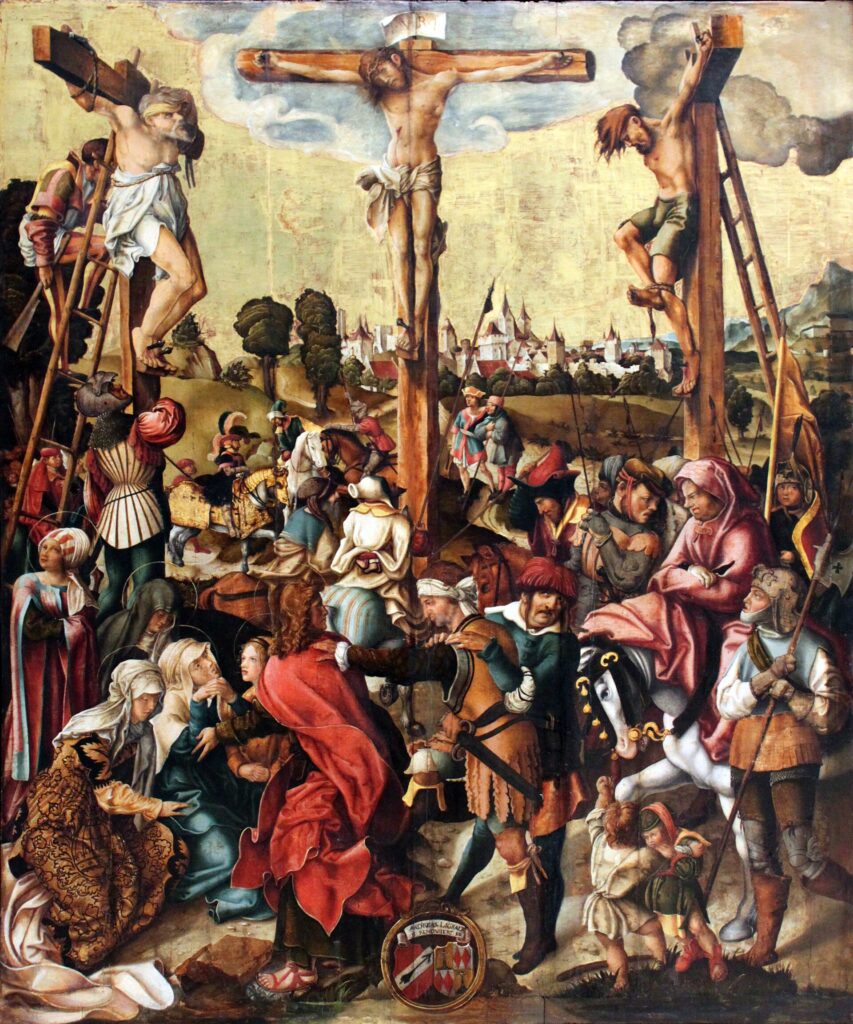
The Crucifixion of Jesus ChristJörg Breu the Elder · Public domain · Wikimedia Commons
To belittle or deny this saddest of facts can only one who is either so old that he has lost the ability to think logically, or so young, stubborn, ignorant and beguiled by sin that, with eyes closed, he knowingly walks into perdition. For the word of the cross on which Christ was crucified “is to them that perish foolishness; but unto us which are saved it is the power of God” (1 Corinthians 1:18).
God reveals to us the nature of sin, the power of sin, our bondage to sin, our powerlessness before it, and also the atonement for sin by Christ’s death on Golgotha, which means that every person has the opportunity to receive forgiveness and deliverance from sin. Christ calls us to repentance and to being born again from above. And to this we must come if we wish to inherit eternal life.
– Why does our grandmother read the Bible so often and for so long? one grandson asked the other.
– I don’t know, he replied and, after thinking a little, added: – probably she is preparing for her final graduation exams.
Are you ready, dear friend, to meet God? Do you not think it is time for you, too, to prepare for the “final graduation exam,” after which either free entrance into the Kingdom of Heaven will open before you, or the abyss of hell will yawn open to receive you for endless torment. “Search me, O God, and know my heart: try me, and know my thoughts: And see if there be any wicked way in me, and lead me in the way everlasting”, prayed King David (Psalm 139:23-24).
Today God sends you, too, dear friend, the opportunity to cleanse your conscience by repentance and to be reconciled with God. “Examine yourselves, whether ye be in the faith; prove your own selves. Know ye not your own selves, how that Jesus Christ is in you, except ye be reprobates?” (2 Corinthians 13:5).