


The Repentance of Peter

The Repentance of Peter
“And the Lord turned, and looked upon Peter… And Peter went out, and wept bitterly.” The faith/gospel/" title="Gospel">Gospel of Luke, chapter 22, verses 61–62
THERE is no one who has not sinned in his life. Most people sin many times, and only a few sin rarely. And the more consciously and attentively a person regards his life, the more faults he finds in himself, and the more often the prayer of repentance rises from him to the Lord.
We have all trembled as we read in the Gospel the story of Peter’s fall (Luke 22:54–62), and with bated breath we have watched the atmosphere thicken around him. We felt an unspoken sympathy for him, because in his story we found so much that is like what so often happens to us. As we follow the sad course of his fall, we see that every human soul still walks to sin along this same well-worn road.
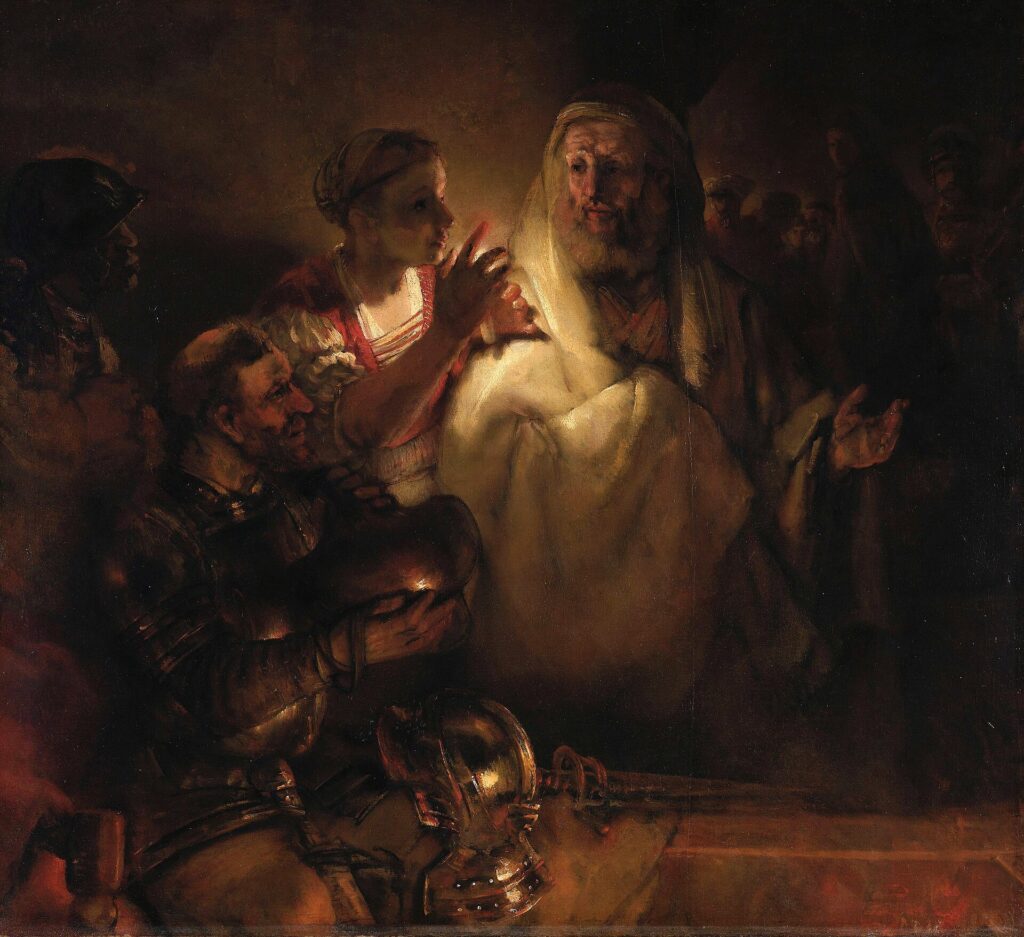
How could Peter sleep in the Garden of Gethsemane when he ought to have watched and prayed? And have not the falls of many of us come from this very cause? Would not many of us, like Peter, have followed Christ afar off, instead of walking beside the Master? We all know too well what it means at times to draw back from Christ, and so we would not ask Peter why he warmed himself at the fire with the others.
Whoever knows how treacherous our heart is will not be surprised that Peter, who had walked with Christ for so long, who had seen all His miracles, who had been counted worthy among the chosen few to behold the glory of the Transfiguration, could deny his Lord. To deny Him and to swear in the presence of Christ, when the most solemn words ever heard by men seemed still to be ringing in his ears; when his heart was still warm with the memory of the last supper; when the wine of communion had not yet dried on his lips! Alas! Such things are not strange to any who take part in the terrible tragedy of sin.
But in the life of Peter there is a fact greater, though less known, than his sin: it is his repentance. All men are one with Peter in his sins, but not all are ready to repent as he did. Peter the sinner is one man, and Peter the penitent is quite another. Many who accompanied him on the well-worn road to sin left him to go alone on the tearful path of repentance. Yet the true lesson of Peter’s life is the lesson of repentance. His fall teaches us little, but his repentance is a great lesson for the salvation of those who, like him, have become aware that they have sinned.

The Divine Origin of Repentance
Repentance comes from the Lord. It was not Peter who turned, but the Lord, who turned and looked upon Peter. Perhaps the crowing of the cock did bring him to his senses, but at the moment of committing sin the sinner’s thoughts are far from repentance. Peter did not think of turning around, but the Lord turned to him, and when he was ready to look anywhere except at the Lord, the Lord looked at him. This fact, barely mentioned in the Gospel, that the Lord turned first, holds a great lesson for every sinner.
There are two kinds of sorrow for sin, differing in origin, in spiritual worth, and in their influence on our lives. Ordinary repentance consists in this, that a man who has done wrong regrets it. It seems to us that regret is a kind of guarantee that we will not do the same thing another time. In regret we try to see proof that we are not so bad after all, since we rebel against sin. In the feeling of shame and regret that follows so immediately upon sin we see a mitigating circumstance, a certain atonement for the evil done. Such sorrow is well known to all who struggle with sin. People crave this feeling, because it gives relief to a crushed heart and makes the prayer of repentance more fervent.
But this truth is terrible precisely because in such a state of soul there is no true repentance. There may not even be a hint of repentance! For most people the sense of shame and regret is all they feel. But this state is not at all genuine sorrow for sin. It is only wounded self-love. It is vexation at the thought that we proved too weak against sin.
We thought ourselves strong, and when the trial came, we saw with vexation that we were defeated. This vexation we mistakenly take for repentance. But this repentance is not a gift of divine grace; it is merely wounded pride, the pain of not having acted better and of proving not at all as good as our loved ones, and we ourselves, supposed us to be. It is as if Peter had been able to turn around, look at himself, and see clearly what a weak, what a pitiful creature this Peter is! Peter might perhaps have wept just as bitterly even if the Lord had not looked at him, but he would have wept not because he had sinned against Christ, but because he, His close disciple, had yielded to weakness and proved as frail as other men.
Although we regard the waves of dejection that come over us after committing sin as a certain stage of repentance, and even as an atoning circumstance which the Lord will surely take into account, often this dejection is nothing other than irritation and annoyance with ourselves because, in spite of all our good resolutions and attempts to remake ourselves, we have once again strayed from the straight path.
Compare this repentance with the prayer of repentance of the publican in the temple (Luke 18:13). In him there was neither annoyance nor wounded pride. As we read of it, we feel that the Lord could not but turn and look at the publican when he cried to Him: “God be merciful to me a sinner.” It was as though the Lord were standing before him. Weighed down by his guilt before God, this publican thought little of his lost self-respect. He felt no shame in acknowledging himself a transgressor and in learning true, divine repentance.
It is impossible not to notice that the difference between the repentance of the publican and the sorrow for sin described above is the difference between the divine and the human. A certain kind of remorse is awakened in both cases, but in one it is spiritual, and in the other it is purely artistic. In the latter case the danger is especially great, though extremely subtle. That is why the loftier a character is, the more of this purely artistic remorse it contains. As a result, self-love takes the place of genuine repentance and turns it into an unworthy service to pride. True repentance, however, is a touching lesson in human helplessness. The Lord comes to a man’s aid in every circumstance of life. The hand that gives him forgiveness itself guides him to repentance. The Lord turning to a man and looking at him is one thing, and quite another is a man gazing at himself.
There is nothing wrong in a man turning his eyes upon himself, but there lies a danger here: a man may misunderstand what he sees and feels. And what he feels is vexation, as a sculptor feels annoyance at a failed stroke of the chisel. Even people who do not believe in God can feel some vexation when they act badly.
The look of God directed at the face of the sinner brings a Christian element into human sorrow. And in compiling the Christian vocabulary, the Apostle Paul had to create a new word, one that was foreign to all the philosophers of former times and of the present. It was he who told us that sorrow for God’s sake has a wonderful power to work repentance that need not be repented of. This new, holy sorrow is awakened in men when the Lord turns and looks upon their lives. It adds the incense of repentance to the sacrifice of a broken and contrite heart. “For godly sorrow worketh repentance to salvation not to be repented of: but the sorrow of the world worketh death” (2 Corinthians 7:10).
It is just this great difference that the evangelist Luke marks in the life of the prodigal son, between the moment when he came to himself and the moment when he came to his father. “And when he came to himself… he arose, and came to his father” (Luke 15:17, 20). We, too, always come to ourselves and, like the prodigal son, become aware of our unworthy conduct. But we can correct and atone for our mistakes only by coming to our Father.
The Tenderness of the Penitent Soul
The Lord turned and looked upon Peter. There is nothing in the world more sensitive than the human soul when it has been awakened by the divine touch.
People are seldom able to appreciate the delicate beauty and tenderness of the sinner’s heart. We try to move him with words, we use rough and harsh means to rouse him to life. When this does not work, we turn to still harsher words, not understanding that the soul is too fine and tender to be moved by such blunt instruments.
There is a coarseness in human nature that is moved by threats, but the soul is as delicate as breath, and in spite of poverty, cruelty and sin it keeps a wonderful tenderness, which points to its nearness to the Spirit of God, who gave it the breath of life.
Peter was perhaps the roughest of all Christ’s disciples. We picture him as a sturdily built, sunburnt fisherman, impulsive, strong, fearless, hot-tempered, ready to swear and curse. In a word, a wild man, out of whom a great sinner might have come, had the Lord not made him a great saint. But in this untamed soul there lay hidden a wondrous, delicate plant, perhaps the tenderest of all those planted by the Lord on earth. The Lord planted it with His own hand in the soul of Peter. Day after day He warmed it with His holy light, and then the impulses of this wild soul grew gentle and quiet under the influence of the sacred flower, which began to fill even Peter’s rough life with its fragrance.
The Lord used neither thunder nor lightning to make Peter hear His voice. The Lord knew that at the very time when Peter’s lips were uttering the oath: “I know not this man of whom ye speak” (Mark 14:71), a deathly silence reigned in his soul. At that moment, a moment of high and strained feeling, even a whisper would have been too strong for an over-sensitive spirit; therefore the Lord only turned and looked. One look, and that was all. Lightning could not have pierced Peter’s heart as the look of Christ pierced it, melting his soul.
In the Gospel we find a remarkable expression: “…for I am meek and lowly in heart…” (Matthew 11:29). We sometimes wonder that the Lord, so awesome in His majesty, uses so little compulsion toward us, such insignificant creatures. But that is not His way. His usual means is gentleness. The Lord seldom compels us; He guides. He seldom forces, but leads. He does not forget that we are dust.
We would have thought it better if the Lord had used force and threats; then we would more readily do His will. But the Lord requires of us not slavish labor, but free service. Therefore He is gentle with us all. He changes us and directs us to good by a single look. Roughness and cruelty can never conquer a human soul. The Lord did not command Peter to repent, He did not threaten him with punishment. The Lord did not even say anything to him. A single look affected him more strongly than the words he had heard throughout his whole life.
Before us are two great lessons: the gentleness of the Lord and the gentleness of the soul, both equally wonders of God. Perhaps at this very moment the Lord is working secretly upon you, dear friend, though you do not notice it.
Our life is shaped mysteriously. The action of the hand that forms our will is so unobtrusive that we can scarcely believe God’s power was present in it. This is the gentleness of God. The Lord made the heart of Peter sensitive, and yours, and mine, so that His gentleness might be able to work upon it.
Yes, we quite wrongly understand the Lord when we accuse Him of dealing harshly with our soul. Ask yourself sincerely what has most influenced your life, and you will have to answer: it was a gentle, quiet voice instructing you. It was waves passing through your soul so imperceptibly that you could not say where they came from or where they went.
All the great physical forces of the world are invisible and silent. One of the chief of them, the force of gravity, acted for centuries so noiselessly that thousands of the wisest men passed by before one sensitive ear managed to catch the sound of its steps.
And the great spiritual forces that direct a man’s thoughts to God, to truth and goodness, that make him remember in the whirl of worldly life that he has a soul and think of eternity while he is still young and life is sweet to him, these forces do not always appear in warnings in the form of death carrying away our loved ones, or in threats of the coming judgment, or in retribution in the present life, but in a quiet voice that enters the soul, like the look of Christ upon Peter, and turns the sensitive heart of man to God.
A face like the face of a long-dead mother; the melody of a children’s hymn, calling up pure memories of childhood after long sinful years; a fragment of an old, forgotten text of the Bible: these are the messengers of heaven who bring men to the Lord. Many expect Christ to knock loudly at their door until it is opened to Him, but let them remember that this is not His way. A quiet Sunday service, the soft whisper of a psalm and a verse, the groan of our conscience and the deep, deep longing of the heart for perfection: this is the way Christ works upon us.
The Swiftness of Repentance
“Peter went out, and wept bitterly.” When the Lord turned and looked upon Peter, in an instant all his guilt rose in his memory, and what was left for Peter to do but weep bitterly?
Let us today also force ourselves to recall our whole life, and let the gaze of the Eternal reveal to us all the unsightly truth of our past, and then let us ask ourselves whether the words “wept bitterly” would express all the agony we would feel when the Lord lays bare our sin. Peter indeed had reason to weep bitterly. And if we, having sinned, do not shed such bitter tears, it is not because our sin is smaller, but because we have less grace and less humility than he.
In vain we try to comfort ourselves with the thought that our sin is trifling compared with his. There are great sins on earth, but there is nothing answering to the idea of a “small sin.” The smallest sin is still a fall. A concealed sin has nothing to do with its size. Our sin of today or yesterday may be as great as the sin of Peter, of King David, of the patriarch Jacob, or of the many other sinners mentioned in history, whom the Bible sets before all mankind as beacons.
Every sin ever committed calls for bitter repentance. If we see little stirring of the soul in a man’s faith, it is often because there is little depth in it. Faith without contrition is faith without reflection. Let a man think calmly and thoughtfully over his life. Let him remember how the Lord dealt with him from the moment he first lisped His name. Let him then consider also how he came to be capable of sinning. And when he calls up the pictures of the past and forgotten sins rise one after another in a long procession in his thoughts, will not a deep emotion be awakened in his heart, which will find its outlet in tears?
Yes, faith without emotion of the soul is faith without reflection. And conversely, a man who thinks deeply about his actions will always find in himself enough heartfelt emotion to awaken bitter tears of contrition in his soul. Only see to it that this inner emotion flows in the right channel, that it passes into action and not into rapturous sentimentality, that it does not remain mere nervous excitement or selfish fear. Without doubt, Peter’s tears were beneficial to him. To the bitterness of that night of repentance he owed the sweetness of the rest of his life.
Solitude Is the Companion of Repentance
PETER went out as soon as the Lord turned and looked upon him. No one noticed this silent exchange of glances. But the look took effect. It at once made a well-known man solitary, set him apart from the whole crowd. “Peter went out.” And there was probably not, that night, one man in God’s world more lonely than Peter with his sin.
Men know two kinds of loneliness: the loneliness of space and the loneliness of spirit. A fisherman in a boat in the midst of a boundless sea feels the loneliness of space. But this loneliness is not real. The images of those dear to his heart are right there with him in the boat. His thoughts are full of them.
But Peter experienced the loneliness of spirit. A distance wider than the sea separated the disciple who had betrayed the Lord from all other men and made him weep alone.
The Lord, turning to Peter, did not wish a stranger’s voice to break the silence. This explains the great importance attached to solitude in true Christian life. Of course there may be exaggerations in one direction or the other. But in our stormy times men especially need the priceless truth that the Lord desires to speak with a man alone. That is why the Lord awakens in every truly Christian heart a longing for solitude, for prayer behind a closed door.
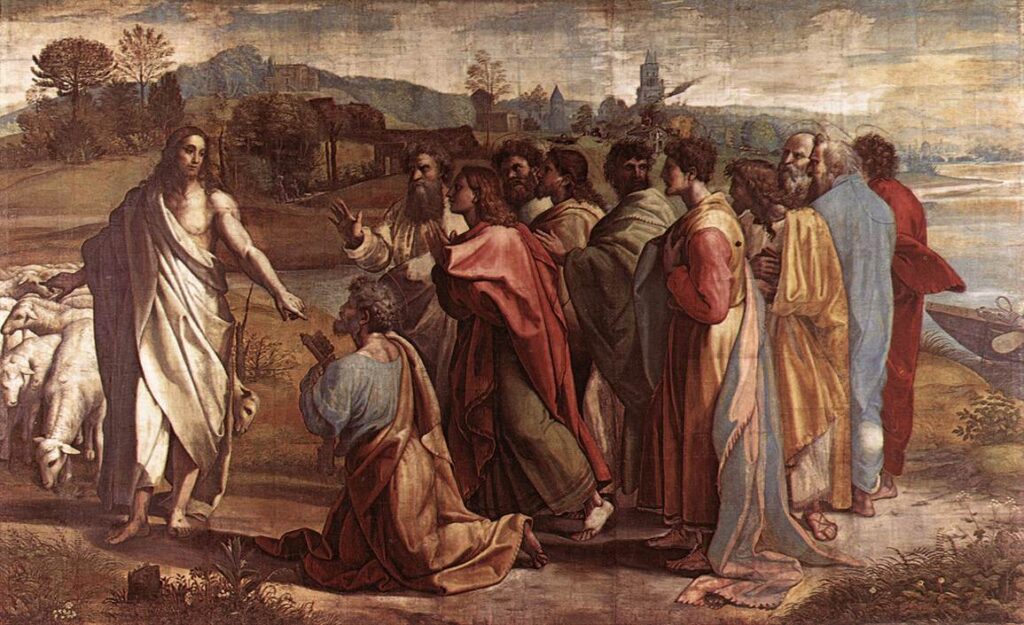
Deep pity is due to believers whose spiritual life knows no solitude. The divine experience that hallows the Christian heart remains foreign to one who does not know what it is to leave at times all the commotion and cares and to be alone with the Lord, listening to what He wishes to say to his heart. The solitude of Peter has a special beauty also because he withdrew in time. In the repentance of Peter we see not only strength and solitude; we are struck also by its swiftness. Peter was not at all forced to leave. He could have remained in his place, fearing nothing.
The Lord looked at us when we sinned, but we did not act like Peter, who let no time pass between sin and repentance.
We often destroy the grace of repentance by waiting until the sin has grown old. We do this deliberately. It seems to us that time softens the sharpness of sin and takes away its bitterness. We put off repentance until, as we think, the edge of the sin has grown dull. As though time, as though eternity itself, could make the sinner’s deed less vile. Time does not diminish sin. In vain do men try to wait for its minimum in order to be rid of it by repentance.
THE TRUE TIME FOR REPENTANCE IS PRECISELY THE TIME WHEN WE SINNED. Peter repented immediately after committing his sin. He repented not on his deathbed, not in old age, but just when he sinned.
Many people put off the hours of their repentance as long as they can, put them off so long that it can no longer help them. They refuse to notice the gaze of the Lord turned upon them until He turns and looks at them on the day of judgment. Only then will they go out to weep. But then they will go out into a dark night that has no dawn.
This is what Peter’s repentance teaches us.
When Christ speaks, His speech is so quiet and gentle that no one can hear that whisper except you, dear friend. Perhaps today, as you were reading this article, the Lord turned and looked at you. And you “went out” to weep bitterly. No one noticed on whom the look of God was directed, and no one knows that it was you. You are perhaps in your usual place, but your soul at this moment is far from here, occupied with some former sin. And the Lord Himself will give you the bitterest and at the same time the sweetest lesson of life: the lesson of deep, heartfelt repentance. Do not go back into the crowd until the Lord looks upon you once more with the look with which He looked upon the thief on the cross, until you see the radiance of God’s love on the face of the Lord Jesus Christ!